The results
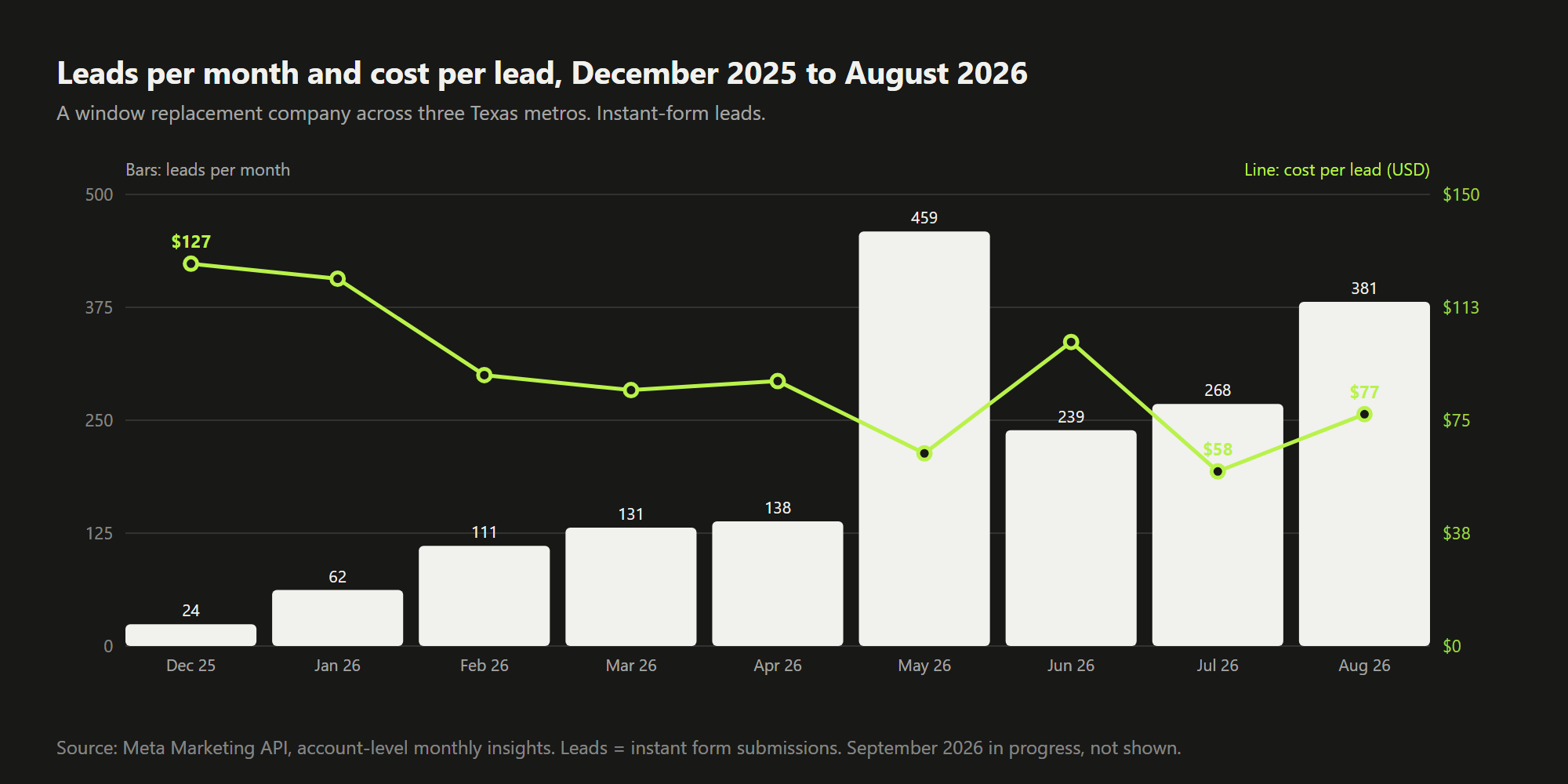
- 10xMonthly spend went from $3,000 in December to $29,500 in May, and the client kept it there. Leads went from 24 to 459 in the same window.
- -50%Cost per lead went from $127 in December to $64 in May. August closed at $77 on $29,300, with 381 leads.
- 1,800+Instant-form leads in nine months on $143,000 of spend, a blended cost per lead of $79 including the expensive first two months.
The context
Window replacement is a considered purchase with a long sales cycle. The client runs a call center that works every lead by phone, so the campaigns optimize for instant forms inside Meta, not website visits, and the form fields are what the call center needs to qualify. Three metros, one brand, one budget that has to be split by where the crews have capacity.
The account started small in December with one campaign and an unclear form setup. The business wanted to know if Meta could carry real volume before moving budget from other channels.
What I did
Stage 1: one standard, five ad sets
December 2025 to February 2026
- One instant form, one call to action, one destination, used identically in every location ad set. Before, forms and CTAs varied by ad set, which made results incomparable and creative reuse impossible.
- Five location ad sets, one per metro or sub-market, each with its own budget, so spend follows crew capacity and the client can read cost per lead by area.
- A staging campaign, paused, where every new creative is built first and reviewed before it is copied into the live ad sets. Nothing goes live untested.
Stage 2: scale with creative supply, not just budget
March to May 2026
- Video lead ads on a monthly cadence, each approved creative duplicated into all five location ad sets in one pass. Reuse is what lets a $29,000 month run with the same operational load as a $10,000 one.
- Budget followed the results: spend went 3x from February to May while cost per lead fell from $90 to $64. May closed at 459 leads.
- Consent checkboxes for SMS follow-up built into every new form, so the call center can text leads legally. Existing forms are replaced as creative rotates rather than rebuilt all at once.
Stage 3: reading the summer
June to August 2026
- June kept May's spend and lost 40% of reach. Cost per lead went to $101. The audience had been bought several times over: frequency, not the creative, was the problem.
- July pulled spend back to $15,500 with fresh creative. Cost per lead dropped to $58, the best of the year.
- August scaled back to $29,300 on the July creative and held cost per lead at $77 with 381 leads. Scale is safe when it follows a creative refresh, not when it replaces one.
What did not work
- The first two months. $127 and $122 per lead while the forms, the destination and the ad set structure were still being standardized. The learning phase was slow because every ad set was learning something slightly different.
- June. Holding a record budget on aging creative cost the client about $15,000 in leads that were 60% more expensive than they needed to be. That is where the rule above comes from.
- Lead quality is measured in the client's CRM, not in Meta. Cost per lead is the proxy I can optimize weekly. Closing the loop on which ad sets produce appointments is the next step, and it depends on CRM data the client is still consolidating.
What this looks like for an agency partner
Multi-location clients are where white-label pays off most for an agency. The setup is the work. Once the standards exist, a new metro is a new ad set and a copy of the winning creatives, and the report reads cost per lead by area in one table.
$350 per account, per month, fixed. No minimums.